The 2026 AHA Health Care Workforce Scan opens with a statement that has broad implications for anyone thinking about technology in hospitals.
"AI use continues to expand, but it works best when paired with redesigned processes."¹
The AHA draws on McKinsey's 2025 State of AI report, which found that high-performing organizations are nearly three times more likely to have fundamentally redesigned workflows as part of their AI efforts. Companies that simply add AI to existing processes rarely see meaningful financial returns. The ones that do are the ones that rewire how work actually happens.²
For hospital hiring, this framing raises a direct question. Which parts of the hiring process have been redesigned? And which parts haven't?
What Changed
Sourcing changed. AI-assisted outreach, automated job posting, and candidate matching tools expanded the pipeline and reduced the time it takes to get qualified applicants into the funnel. The investment hospitals made in this area delivered measurable improvement.
Screening changed. Automated credential verification, document review, and initial filtering moved faster than ever. What used to take days happens in hours.
Credentialing and compliance systems changed. Large health systems invested in platforms that track licensing requirements, accreditation standards, and documentation across multiple states and facilities.
Each of these changes involved redesigning the process, not just adding technology to an existing one. The tools changed how work moved.
What Didn't
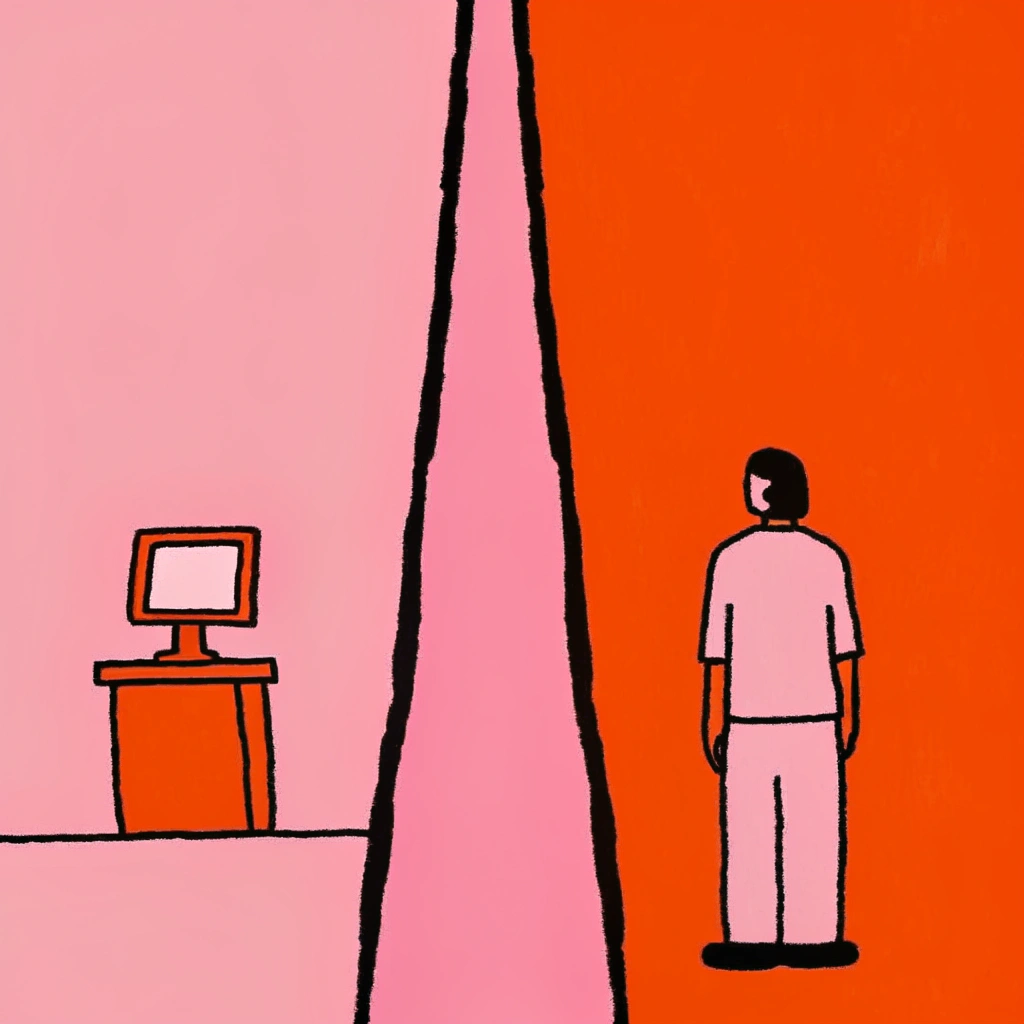
When a candidate clears screening, the process hands off to a person.
A hiring manager needs to review the profile and decide whether to interview. After the interview, they need to complete a scorecard. After that, they need to approve or decline the offer. Three separate decision points, each requiring a clinical leader to take an action inside a system they use a handful of times a year.
That workflow has not been redesigned.
The ATS notification arrives. It sits in an inbox. The hiring manager is running a unit, managing patients, coordinating staff. The notification waits. GoodTime's 2026 Healthcare Hiring Trends Report found that hiring slowdowns in hospitals are driven primarily by decision-maker follow-through, not candidate supply.³ The pipeline has candidates. The decisions aren't coming.
This is not an AI problem. It is a process design problem. The current process assumes the decision-maker will come to the system. In a clinical environment, that assumption consistently fails.
What Redesign at the Decision Stage Would Look Like
The AHA's description of effective process redesign is worth reading carefully. It is not about adding more reminders or escalation protocols. It is about changing where and how the work happens so that the right action occurs at the right moment.
For the hiring decision stage, that means the decision request reaching the decision-maker in the environment where they actually work, in a form that requires the minimum friction to act on, at a moment when acting is possible. Not a notification in a desktop inbox. Not an email competing with everything else in the queue.
Sourcing was redesigned around how candidates behave. The decision stage needs to be redesigned around how clinical leaders behave.
That is the process gap the AHA's framing points to. And it is the one that determines how long vacancies actually stay open.
Sources
-
American Hospital Association. 2026 Health Care Workforce Scan. https://www.aha.org/aha-workforce-scan
-
McKinsey & Company. "The State of AI in 2025: Agents, Innovation, and Transformation." QuantumBlack, AI by McKinsey. November 2025. https://www.mckinsey.com/capabilities/quantumblack/our-insights/the-state-of-ai
-
GoodTime. 2026 Healthcare Hiring Trends Report. https://goodtime.io/blog/recruiting/healthcare-hiring-trends/